
The Psychology of Comfort: Designing rooms that feel safe and beautiful
Have you ever walked into a room that looks lovely on paper, but still feels a little unsettled? Or stayed in a hotel where you immediately relaxed, even though the décor wasn’t your usual style? There’s a reason that happens, and it has far less to do with trends than you might think.
One of my favourite interior design theories, is Prospect–Refuge Theory. It’s a simple idea that explains why some spaces feel calming, comfortable and “right”, while others feel exposed, awkward or hard to settle into.
At Inside Out Colour & Design, I work with clients here in Sydney who often say things like: “I don’t know what’s wrong with this room, but it doesn’t feel cosy,” or “It’s a beautiful space, but I never want to sit in it.” Prospect–Refuge gives us a practical way to fix that.
What is Prospect–Refuge Theory?
In plain English, Prospect–Refuge Theory suggests we feel most comfortable in spaces where we have:
Prospect: the ability to see out, look across the room, or take in the view
Refuge: a sense of protection, support, or shelter behind or around us
It’s why people naturally choose the booth seat in a café, the corner chair in a waiting room, or the spot on the sofa that has a view of the doorway. We’re drawn to places where we can observe what’s happening, but we don’t feel “on show.”
You don’t need to turn your home into a fortress to use this theory. In interiors, refuge can be as simple as a solid headboard, a chair with a high back, a sofa backed by a wall, or the way lighting and curtains make a room feel more enclosed at night.
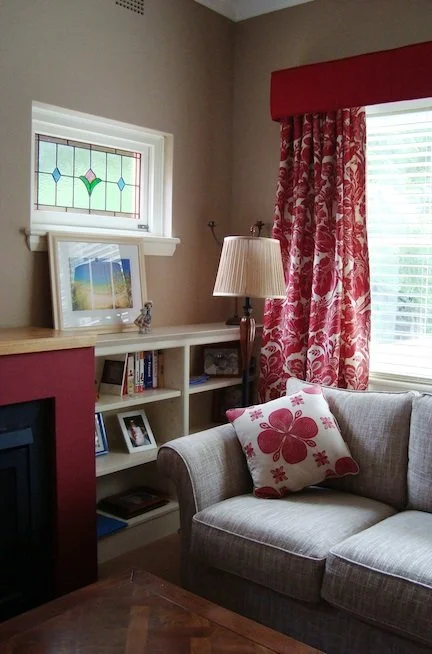
Prospect and refuge in action: a cosy corner sofa with a view, softened by warm lighting and layered window treatments | Inside Out Colour & Design
Why it matters in Australian homes
This theory is particularly helpful in Sydney homes because many of them have features that are beautiful, but can feel a little exposing if not handled well.
Think:
open-plan living areas that are wide and undefined
large windows or glass doors that create openness, glare, and a sense of being visible
living rooms where furniture “floats” in the middle because you’re trying not to block walkways
bedrooms where the bed placement is dictated by windows or doors, and the room never quite settles
Prospect–Refuge helps you create a sense of calm and comfort without sacrificing that light, airy Australian feel.
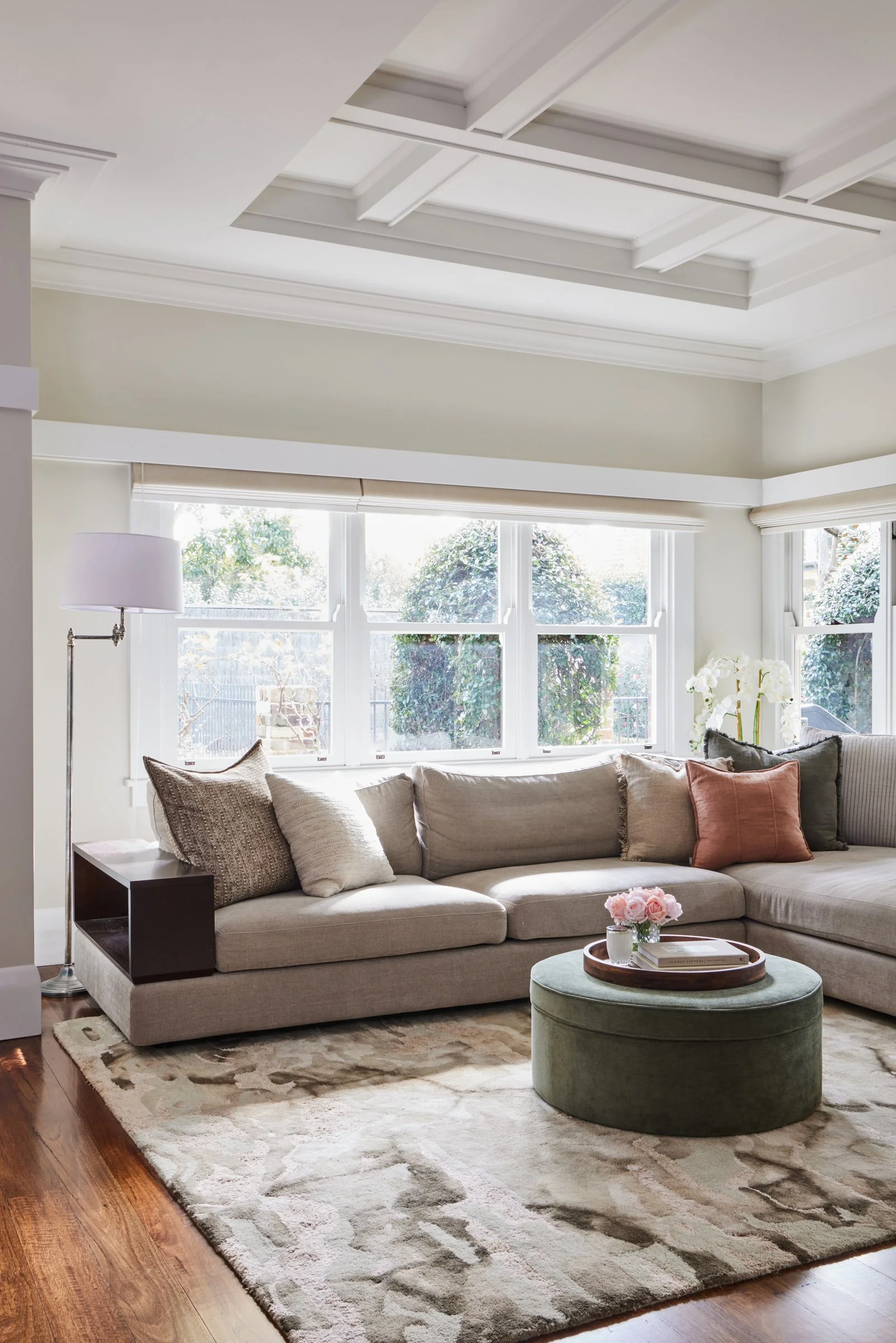
Open and light, but still cosy: anchoring the seating zone creates that Prospect–Refuge comfort in an Australian living room | Inside Out Colour & Design
Signs your room is missing refuge
If any of these sound familiar, Prospect–Refuge might be the missing piece:
You tend to perch on the edge of the sofa instead of sinking in
You avoid a particular chair or corner because it feels exposed
You feel visually “busy” or unsettled, even when the room is tidy
At night, the room feels harsh or flat under downlights
Your bedroom looks fine but doesn’t feel restful
The good news is that the fixes are usually simpler than people expect.
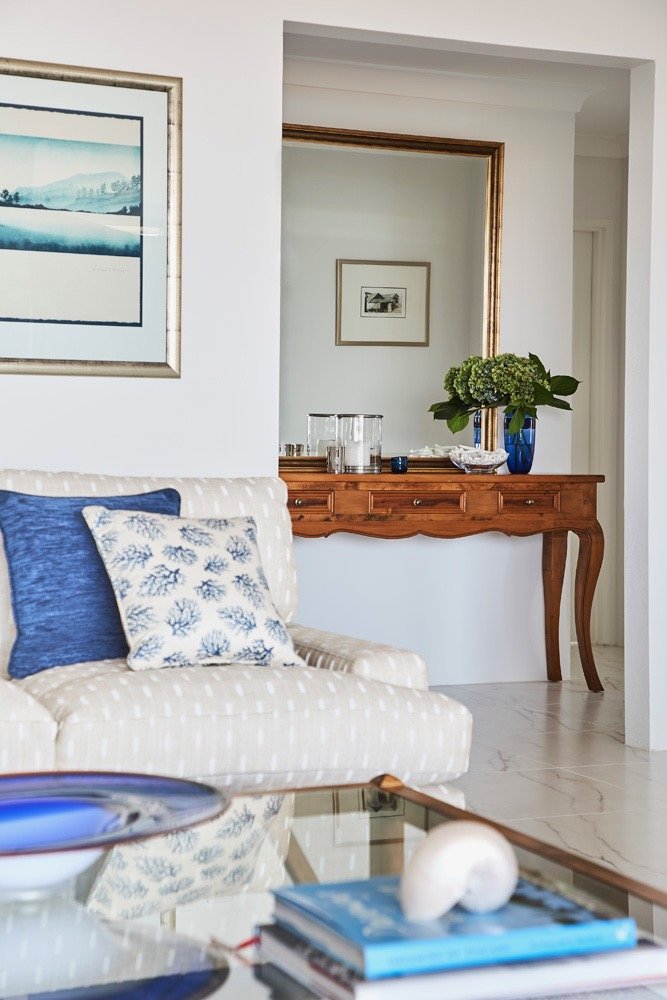
Instant refuge fix: a console table and artwork create a calm “backing” to the space, so the seating area feels anchored and settled | Inside Out Colour & Design
How to use Prospect–Refuge in your home
1) Stop “floating” the sofa if it makes the room feel exposed
A floating sofa can look very designer in a magazine. In real life, it often makes people feel like they’re sitting in the middle of the room with no support.
If your sofa is floating because of walkways, try adding refuge in subtle ways:
Place a console table behind the sofa and style it with a lamp
Add a low bookcase or storage piece behind to create gentle boundary
Anchor the sofa with a large rug so the seating zone feels contained
Consider a pair of armchairs that sit closer to a wall or corner to offer more refuge seating options
You’ll often find that as soon as you create one “protected” seating position, the whole room feels calmer.
2) Create a “best seat” on purpose
In every living space, there’s usually a seat people gravitate to. It’s almost always the one with both prospect and refuge.
To create it intentionally:
Choose a chair with a higher back or arms
Position it so the person has a view across the room and ideally of the entry
Add a side table and lamp to make it feel established
Ground it with texture (a cushion, throw, or nearby curtain) so it feels inviting
This is the kind of small shift that makes a home feel instantly more livable.
3) In bedrooms, refuge matters even more
If there’s one room where Prospect–Refuge really earns its keep, it’s the bedroom.
A bed feels more restful when:
There’s a strong, stable “back” behind you, often a solid headboard
You can see the doorway without feeling directly in line with it
The lighting is layered and soft rather than a single bright overhead source
If your bed is currently “floating” or the headboard sits under a window without weight, consider:
A substantial upholstered headboard
Layered window treatments that add softness
Bedside lamps that create a warm pool of light on either side
These changes don’t just make the room prettier. They help your nervous system switch off.
4) Use lighting to create refuge at night
A room can feel completely different once the sun goes down. Many people don’t realise how much downlights can flatten a space and remove the sense of refuge.
Instead, aim for layers:
table lamps
wall lights or sconces (where possible)
floor lamps in corners
warm pools of light rather than one bright source
If you’ve ever felt instantly relaxed in a boutique hotel room, it’s usually the lighting doing a lot of that work.
5) Make windows feel like a view, not a stage
Large windows are a gift, but they can make you feel exposed if you don’t have the right layers.
For many homes here in Sydney, the answer is:
sheers for daytime softness and privacy
blockouts or heavier drapery for night and comfort
a layout that lets you enjoy the view (prospect) while still feeling supported (refuge)
Even if you never close the curtains during the day, having the option matters psychologically.
6) Add “soft boundaries” in open-plan spaces
Open-plan living is brilliant for light and connection, but it can feel unsettled without clear zones.
You can create refuge without building walls by using:
rugs to define areas
furniture placement to form gentle “rooms within a room”
changes in lighting over dining vs living
tall plants, screens, or joinery as subtle dividers
Often, the goal isn’t to make it smaller. It’s to make it feel more intentional.
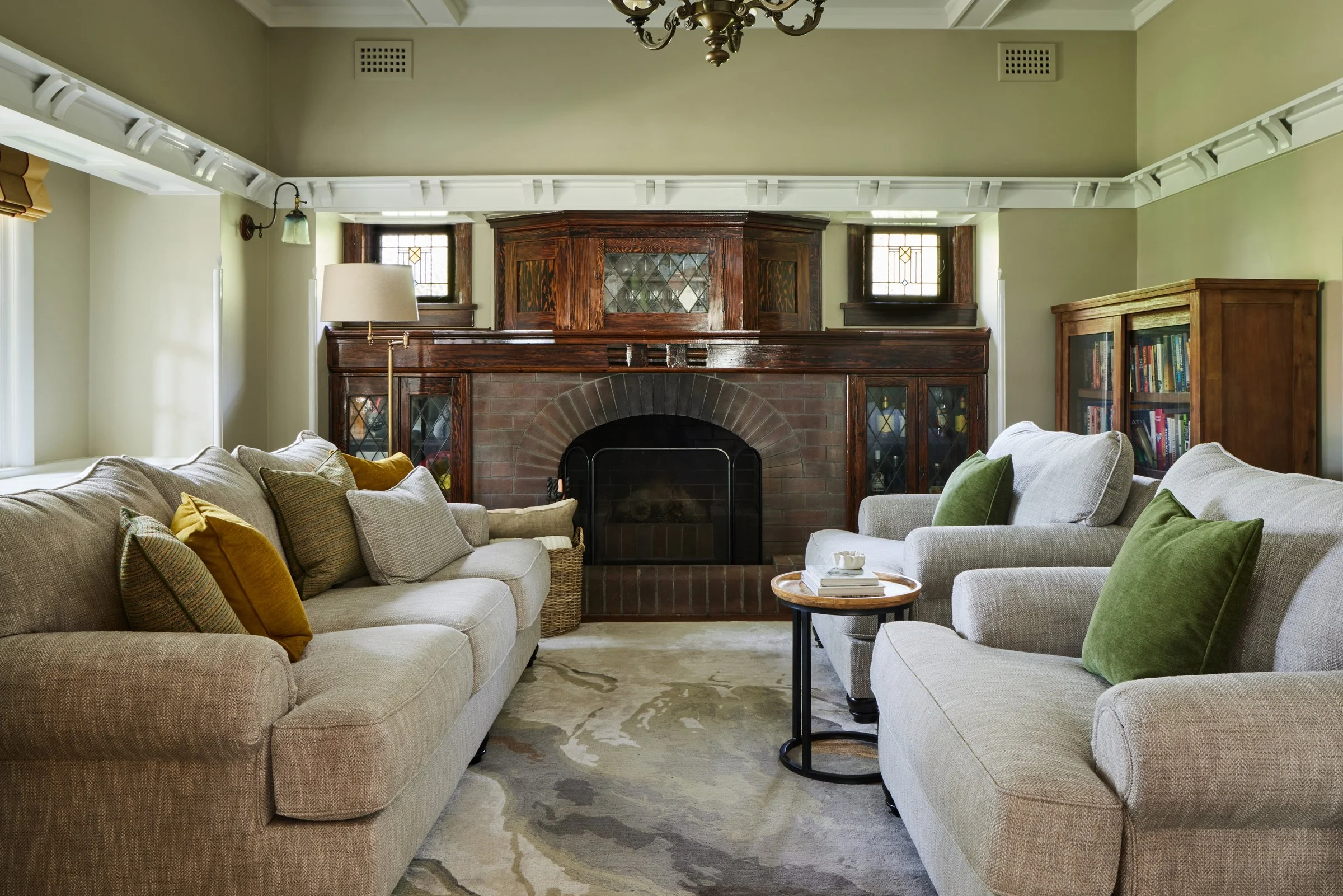
Prospect and refuge made easy: sofas anchored to the edges and a generous rug create a cosy, settled zone with a clear view to the fireplace | Inside Out Colour & Design
Why this theory makes design feel easier
I love Prospect–Refuge because it takes interior design out of the vague realm of “I just don’t like it” and into something you can work with.
It helps you diagnose what’s off, then adjust layout, lighting and layers in a way that feels grounded and human. When a room has both prospect and refuge, you naturally want to spend time there. It becomes the place you exhale.
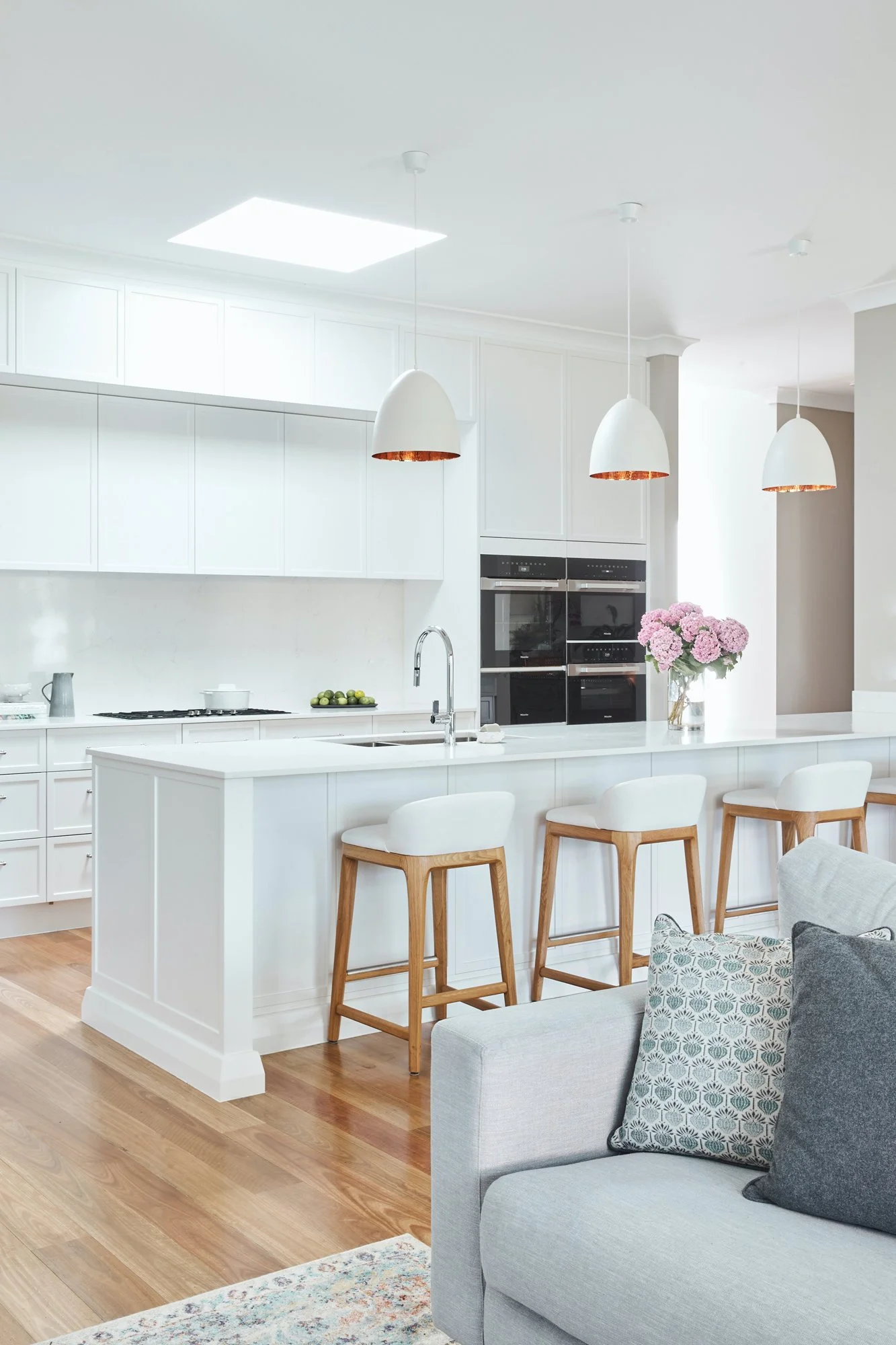
Prospect–Refuge made simple: a clear view across open-plan living, with the island and seating zone creating a calm, comfortable “place to land” | Inside Out Colour & Design
Want help applying Prospect–Refuge in your home?
If your home looks fine but doesn’t feel quite right, it’s often not about buying more things. It’s about arranging what you have in a smarter way and making a few considered upgrades that support how you actually live.
At Inside Out Colour & Design, I work with my clients to create calm, cohesive, comfortable interiors that feel like home, not a showroom. If you’d like help refining your layout, choosing finishes, or making your space feel more settled and grown-up, I’d love to chat.
Get in touch with the team here at Inside Out Colour & Design and let’s create a home that feels beautiful and easy to live in!